first time skiing
“Play inside yourself,” Steven.
I can still hear my acting teacher’s voice. I had the same coach for most of my acting career—from sophomore year of college until I was basically done with the working actor life in 2015. He was a baseball guy, so sports metaphors were rife: don’t try to throw a pitch you don’t have. That’s how you blow out your arm and lose the game for your team.
The same thing shows up on stage. You can feel when someone is reaching—grasping for something that isn’t actually available to them. An actor trying too hard, or a singer straining for a note that’s just… not in their range. It’s uncomfortable for the audience when it doesn’t land.
—————————————————
I’ve never been a skier. I did go once as a freshman in college, though. A friend had a house in the Berkshire’s, and mostly I just remember trudging from lift to lift wondering how everyone else seemed to be so much more comfortable than me; walking in skis, if you have no idea how to move in them, is awful.
I went again years later with my family, where I was somehow the most experienced skier in the group, which tells you everything you need to know. I was terrified of the lift, convinced I was going to snap an ankle every time I got off, and for some reason never thought, “maybe I should take a lesson.”
Or maybe I did think it—but ignored it. “I can figure this out. How hard could it be?” Turns out, very hard. So hard I never really considered going again.
But when a close friend of mine—someone who grew up skiing and even took a year off to teach—said, “let’s go for a weekend,” a few weeks ago, I said yes.
This time, I took the lesson.
The first question everyone asked me when I got back was:
“Were you any good?”
I get the question, but I keep coming back to this point: I don’t think “good” is the right frame, especially early on.
I wasn’t good. I wasn’t bad. I was just… learning.
What does “good” even mean when you’re doing something for the first time?
Same as when I first picked up a kettlebell. If you look back at those early swings, you’ll see how rough they are.
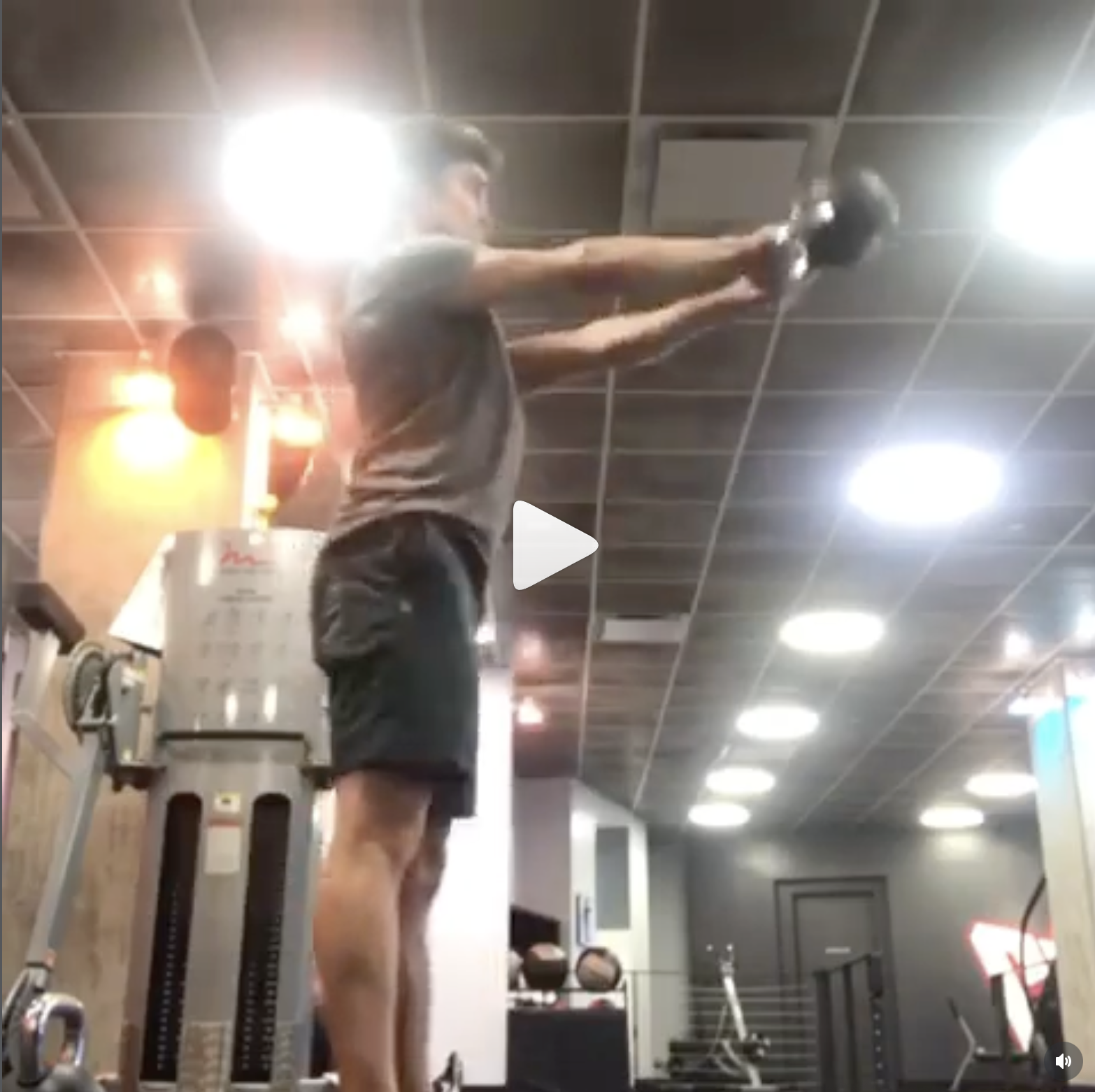
But I didn’t start with a bell that could hurt me. I started light, built some awareness, and let the skill catch up over time.
That’s playing inside yourself.
If I need to be good right away, I’m probably going to push too far, too fast. If I’m allowed to just be learning, I can actually pay attention to where I’m at and what’s happening.
That’s what having a good coach helps you break down. It’s one thing to get into a shape in a yoga class, or start swinging the kettlebell, hoping for the best. It’s another to take a second to feel where you’re at, communicating with your body: how do I feel right now? Why, when I lift my arm there, does it feel off?
Skiing made that concept painfully clear.
—————————————————
Maybe some of you reading went as a kid and remember dive bombing down the whole mountain, or you’re pretty experienced and can handle that speed even now. But as a beginner (and believe me, this wasn’t obvious to me at first) you don’t just go straight down the mountain. You move across it—left, then right, zigzagging your way down to control speed.
Here’s the catch: when you’re skiing left, your right leg is downhill, carrying more of your weight. When you turn right, that switches—you need to smoothly shift into your left leg.
That’s where things got interesting for me.
Like most people, I’m stronger on my right side. I work on it constantly; when I train consistently, the two sides are almost identical. But if I start to get a little lax with training, or try a new skill, the asymmetry will rear its head a little more clearly.
And on skis, it mattered.
When it was time to shift into my left leg, I didn’t. Or at least—not well. I had a hard time unweighting my right side. As I picked up speed and confidence, that gap didn’t magically close. It got exposed.
I’d turn, but my right ski would lag—slightly out of sync with the rest of my body, doing the wretched Pizza that my ski coach was trying to have me avoid. My left leg was pointing forward, my right leg pointing in. That mismatch created torque, and I could feel it: pressure building along the inside of my knee. Sometimes subtle. Sometimes… not.
While my coach was remining me to keep my skis parallel, the thing I was more preoccupied with was falling.
Falling hard going fast was my biggest fear.
To my credit, I didn’t panic.
My friend even pointed that out—said I looked calm and composed the whole time. My acting coach’s advice was loud in my inner ear: you can feel the adrenaline in your body, the thing that pushes you to want to go faster, while at the same time wanting to run away from the mountain. But I kept repeating, “play inside yourself, Steven.” I stayed focused. Eyes forward. Taking in the slope. Trying to execute what I’d just learned.
But as calm as I presented on the outside, there was no way out of the mechanical pressure that some of those runs down the mountain put on the inside of my knee.
—————————————————
The next day, back in the city, I felt fine.
By Tuesday, stairs were a big problem. By Wednesday, I was in that familiar mental spiral—trying to assess: Did I mess something up? No pop, which was reassuring. But something was off. Pain lingering. Stiffness. That low-level throb that makes you pay attention.
My muscles didn’t feel particularly challenged through the weekend. It was more of a mental exertion than a muscular one at the beginner level; I was learning a skill, trying not to overload it too quickly. But that inability to get off my right leg caused a joint issue. The tendons and ligaments of my knee were doing something they didn’t want to do, something they weren’t used to.
By the following week, the pain still wasn’t gone. So I did what I’d tell any client to do—I got it checked out.
Diagnosis: irritated cartilage. No tear. No structural damage. Just a system that got pushed a little past what it could currently handle.
I didn’t get hurt because skiing is dangerous.
I didn’t get hurt because I fell.
I got hurt because I asked my body to do something it wasn’t quite prepared to do—at speed, under load, with asymmetries I already knew were there.
I stepped just outside my range.
—————————————————
This is the part most people miss.
“Play inside yourself” doesn’t mean play small. It doesn’t mean avoid challenge. It means meet the challenge at the level you can actually own.
Build capacity. Earn the next step.
Because if you skip that—whether it’s on stage, under a barbell, or on a mountain—You might have to pay for it.
I’m already looking forward to the next time I get on the mountain—not to prove anything, not to suddenly be “good,” but to keep building from where I am. To feel those same turns start to click a little sooner, a little smoother. That’s the part that’s exciting to me now—going back, staying patient, and letting the skill catch up.